
The crew for everything that is not just paint.
Epoxy floors, elastomeric masonry systems, stucco coatings and industrial maintenance products. Different chemistry, different rules, different crew.
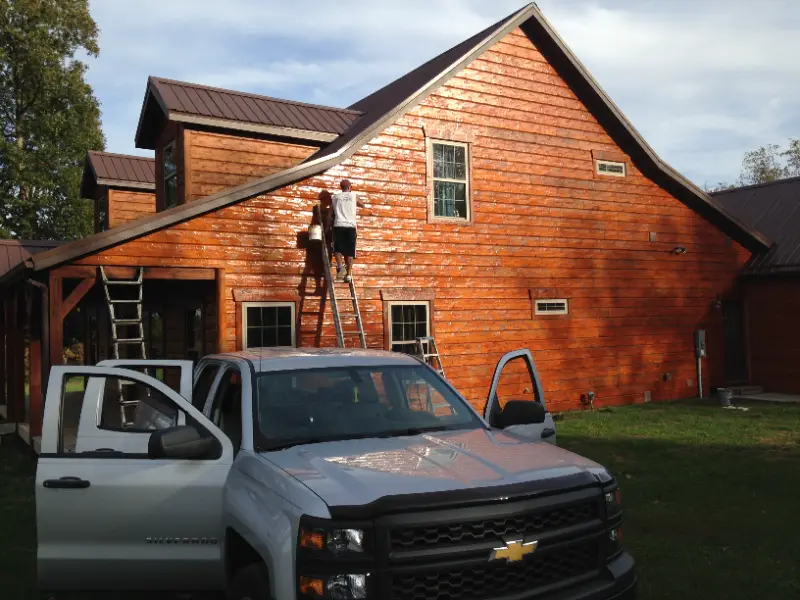
The Painter Hotline specialty coatings crew applies epoxy floor systems, elastomeric masonry and stucco coatings, breathable masonry paints and industrial maintenance products across Colorado. These materials have different surface preparation requirements, different cure behavior and different failure modes than architectural paint, which is why they are handled by a separate crew and specified by substrate and exposure rather than by habit.
Why these are not just paint
Architectural paint is forgiving. Specialty coatings are not. They have narrower application windows, stricter surface preparation requirements, and failure modes that are expensive to correct. Using an architectural crew on an epoxy floor or an elastomeric wall is how you end up stripping a failed coating off concrete.
Epoxy and resinous floors
Garage, shop and light commercial floors. The entire outcome is decided by the preparation: the concrete has to be mechanically profiled, usually by grinding, and it has to be dry. Moisture moving up through a slab will lift an epoxy coating no matter how well it was applied, which is why a moisture test comes before a quote on any slab we are unsure about. More detail on epoxy garage floors in Colorado.
- Mechanical profiling rather than acid etching alone.
- Moisture testing on slabs with any history of dampness.
- Crack and joint treatment before coating, not after.
- Broadcast flake or quartz where slip resistance matters.
Elastomeric and masonry systems
Elastomeric coatings are thick, flexible films that bridge hairline cracks and resist wind-driven rain. On a crack-prone stucco elevation they frequently outperform conventional masonry paint. Two honest caveats that rarely make the sales pitch:
- Permeability varies enormously between products. Some elastomerics breathe acceptably; others are close to a vapor barrier. On a wall with any moisture source, the wrong one accelerates exactly the failure it was meant to prevent.
- It is close to permanent. Removing a thick elastomeric film from stucco is a serious, expensive project. Applying one is a decision about the next few decades.
Anyone who recommends elastomeric before examining your walls is selling a product rather than solving a problem.
Stucco, brick and block
Masonry is porous and generally needs to breathe. Coatings are selected for vapor permeability rather than film thickness alone, cracks are categorized before they are filled, and penetrations are sealed as part of the work. Painting brick in particular is close to irreversible, and we will talk through that honestly before anyone opens a can.
Industrial maintenance
Structural steel, railings, equipment and handling areas where the coating is doing a protective job rather than a decorative one. Specification is driven by exposure, abrasion and cleaning regime, and the product data sheet governs application rather than preference.
Our other crews
Specialty coatings questions
Do you do epoxy garage floors?
Yes. The outcome is decided by preparation: the slab is mechanically profiled rather than only acid etched, and we moisture test any slab with a history of dampness, because rising moisture lifts epoxy regardless of application quality.
What is an elastomeric coating and do I need one?
A thick flexible film that bridges hairline cracks and resists wind-driven rain. It performs well on crack-prone masonry walls, but permeability varies by product and it is very difficult to remove later, so it should be chosen after examining the wall.
Can you paint brick?
Yes, with a conversation first. Painting brick is close to permanent and needs a breathable masonry coating plus good moisture management. We walk through the trade-offs before you commit.
Does stucco need a special coating?
Usually. Stucco is porous and needs to breathe, so the product is chosen for vapor permeability. A coating that seals the wall completely can trap moisture and push itself off, sometimes taking stucco with it.
Do you do industrial and structural steel coatings?
Yes, where specification is driven by exposure, abrasion and cleaning regime. The product data sheet governs the application rather than preference.
How do I know which coating my project needs?
Send photos and tell us what the surface has to withstand. Specialty coatings are specified by substrate and exposure, and getting that wrong is the expensive mistake.
Tell us about the project
Photos and the year your building went up usually get you a written number within a day. If yours really needs a visit, we will tell you.
Prefer to talk it through? 720-208-5645