
The whole house, in order.
Inside, outside, cabinets and deck on one estimate and one schedule, with the preparation set by when the house was built.
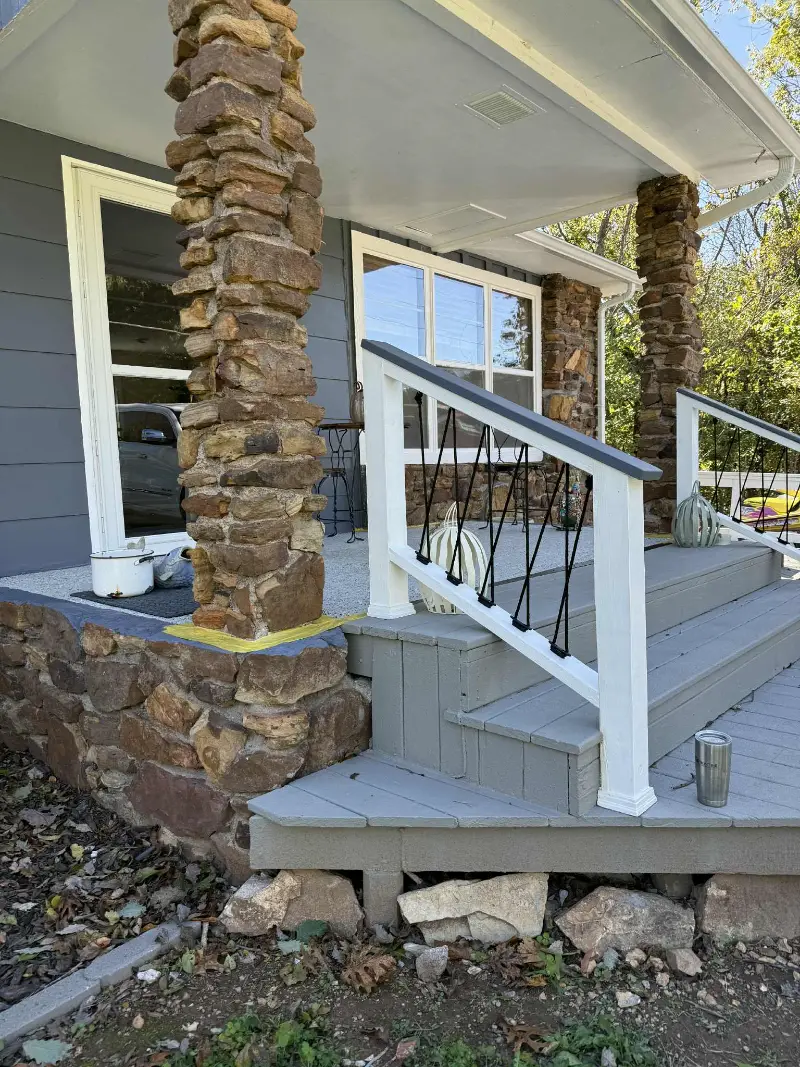
Painter Hotline handles whole-home residential repaints across Colorado's Front Range: exterior, interior, kitchen cabinets and decks on a single written estimate, sequenced so exterior work lands in warm weather and interiors fill the rest of the year. Preparation is planned around the home's year built, because a 1950s ranch and a 2005 two-story fail in different places. Free estimates, fully insured, 5-year written workmanship warranty.
The decade it was built decides the prep
Two houses of the same size can need completely different work. The table below groups Colorado homes by era, with the share of the state's 2.55 million homes from each and the problems we most often find on them.
| Built | Share of Colorado homes | Typical house | What usually fails | Where the prep goes |
|---|---|---|---|---|
| Before 1940 | 7.1% | Brick bungalows, foursquares and Victorians; plaster walls; wood windows and porches | Many layers of old paint on trim and porches, with lead likely underneath. Plaster cracks inside. | Lead-safe scraping, oil- or shellac-based primers over old layers, plaster repair, window glazing |
| 1940 to 1959 | 9.2% | Postwar brick ranches with wood eaves, trim and garage doors | Peeling fascia and soffits, cracked window putty, chalky trim. | Lead-safe prep on original trim, carpentry on soft fascia, primer on bare wood |
| 1960 to 1979 | 24.3% | Bi-levels and tri-levels, cedar and plywood siding, early hardboard | Weathered cedar and plywood panels, failing caulk, dated interior paneling. | Year-built check for lead, stain-blocking primer on cedar, panel-edge sealing |
| 1980 to 1999 | 28.7% | Two-story tract homes with hardboard lap siding, wood trim and decks | Swollen siding bottoms, rotted trim at grade, gray decks, oak cabinets. | Board-by-board inspection, edge sealing, trim replacement, deck and cabinet refinishing |
| 2000 and later | 30.7% | Fiber cement, stucco and stone; flat builder paint inside; HOA palettes | Shrunken builder caulk, faded south walls, scuffed flat interior walls. | Full recaulk, washable interior finishes, HOA submission before scheduling |
Want the numbers for your own town? Each town page charts when its homes were built, and our older homes guide covers the lead rule for anything before 1978.
Why one schedule beats four separate jobs
- Repairs and carpentry first. Rotted trim, soft siding and failed sills get fixed before any coating, inside or out.
- Exterior in the window. On the Front Range, overnight lows decide whether a day works for exterior paint, so outside work is booked for late spring through early fall.
- Interiors fill the calendar. Rooms can be done any month, a few at a time, so the family keeps living in the house.
- Cabinets while the kitchen can be spared. Doors go to the spray area; boxes are finished in place.
- Deck and fence last outside, once the wood is dry and the painters are off the ground.
- One walkthrough, one warranty. You inspect every area, we fix anything you flag, and the whole project carries one 5-year workmanship warranty.
Colors across the whole house
Repainting everything at once is the rare chance to make the inside and outside work together. We sample on your walls and siding in your own light, and if your neighborhood has covenants, the exterior palette goes to the association before the crew is booked.
Selling soon?
Pre-listing paint follows different priorities: fast, neutral and photogenic. See painting before selling.
Whole-home questions
Is it cheaper to paint the inside and outside at the same time?
Usually somewhat, because there is one estimate, one project manager and fewer trips. The bigger benefit is sequencing: exterior work goes in the warm months and interiors can fill the cold ones, so neither waits on the other.
What order should a whole-house repaint go in?
Carpentry and repairs first, then exterior in the weather window, then interiors, with cabinets either before move-in or while the family is away. Ceilings go before walls and walls before trim inside, so drips land on surfaces that have not been finished yet.
Do I need to move out?
Rarely. Interiors are done a few rooms at a time. Cabinet refinishing takes the kitchen out of use for several days, and pre-1978 homes with children under six may call for staying elsewhere while interior lead-safe work is under way.
Can you paint a rental between tenants?
Yes. Turnovers are scheduled to the move-out date, with finishes that are easy to touch up at the next turnover. Pre-1978 rentals always fall under the federal lead rule, because the homeowner exemption does not cover rental housing.
How do I know which era my house belongs to?
The county assessor's record lists the year built. If you are not sure, send photos of the outside and the kitchen, and we can usually tell you what you are working with.
Tell us about the project
Photos and the year your building went up usually get you a written number within a day. If yours really needs a visit, we will tell you.
Prefer to talk it through? 720-208-5645